The Madurai Sultanate occupies a brief yet deeply consequential place in the history of South India. Lasting for about four decades—from 1335 to 1378—it emerged during a period of political collapse, external invasion, and internal fragmentation. Despite its relatively short duration, its rule left behind a powerful historical memory, shaped by accounts of warfare, religious conflict, and harsh governance.
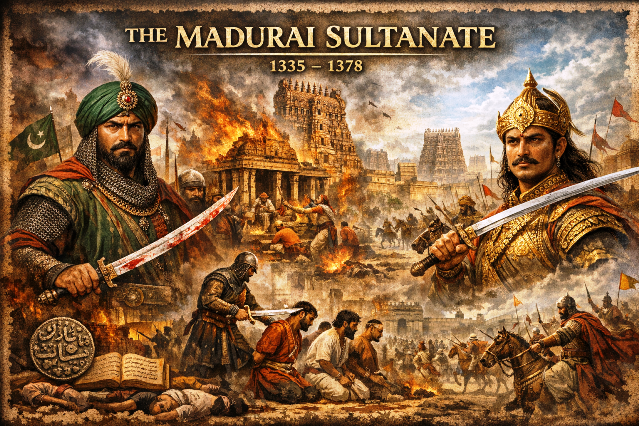
This period is not easy to interpret. Much of what we know comes from diverse sources: Persian chronicles, the travel writings of Ibn Battuta, Tamil inscriptions, and literary works such as Madura Vijayam by Gangadevi. Each source reflects a particular perspective, and together they create a layered narrative that must be approached critically.



No comments:
Post a Comment